




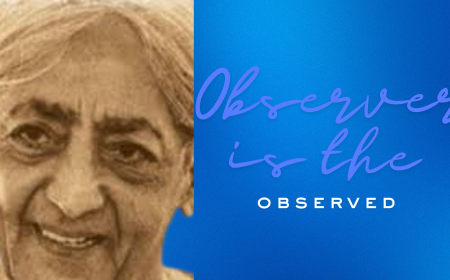


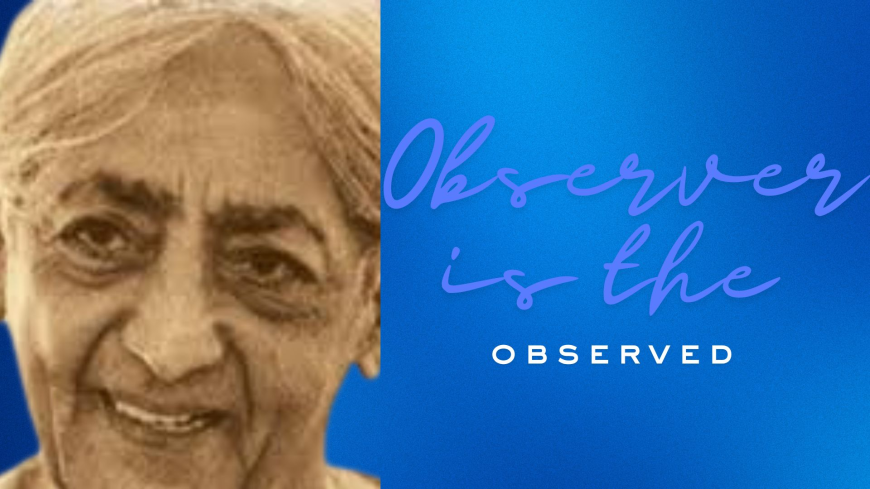
Observer is the Observed
Discover how breaking the illusion of the observer and the observed leads to true awareness and deeper relationships.
Understanding the Observer and the Observed
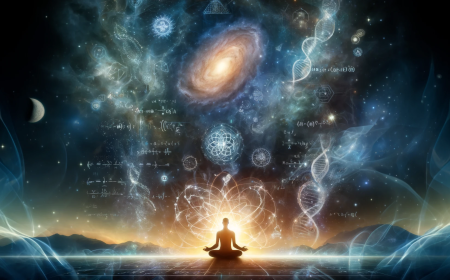
In the intricate landscape of human perception, we often assume a distinction between the observer and the observed. We believe ourselves to be separate entities, analyzing and interpreting the world around us. However, this division is a construct of thought—a psychological illusion that shapes our understanding of life and relationships.
The moment we attempt to identify with something, we unintentionally reinforce division. This identification creates conflict, contradictions, and a cycle of resistance. The observer, in essence, is the cause of fragmentation. By acknowledging this, we step closer to breaking free from conditioned thought patterns and embracing true awareness.
The Illusion of Becoming
Consider the way we perceive violence. We recognize it within ourselves and strive toward the ideal of non-violence. Yet, in doing so, we establish a gap between 'what is' and 'what should be.' This pursuit is paradoxical—an energy-draining endeavor that does not eliminate violence but instead perpetuates division. True transformation arises when we directly observe our nature without attempting to change it through ideals.
Can You Observe Without the Observer?
Try this simple exercise: look at a flower, a tree, or even a loved one without the filter of memory and past experiences. When we observe without preconceived images, we experience reality as it is, not as we project it to be. This is the foundation of genuine perception—seeing without distortion, judgment, or separation.
Our relationships, too, are shaped by mental images. When we interact with someone, we often engage not with the actual person but with our constructed idea of them. This creates misunderstanding, conflict, and an absence of true connection. To observe without the observer means to meet each moment fresh, without the baggage of past experiences interfering with direct perception.
Knowledge: A Tool and a Barrier
Accumulated knowledge is essential for practical life—enabling us to perform tasks, communicate, and navigate the world. However, when knowledge manifests as rigid mental images in relationships, it becomes an obstacle. The ability to differentiate between functional knowledge and psychological conditioning requires deep awareness and intelligence.
The Path to True Awareness
Breaking free from the illusion of separation is not a method or technique but a deep, inward realization. True awareness emerges when we cease to identify with thought-created divisions and observe life as it unfolds. By dissolving the observer-observed duality, we experience unity, presence, and an unfiltered connection with existence.
Final Thoughts
To live without division is to see the world without distortion—to embrace relationships, nature, and oneself without preconception. The observer is not separate from the observed; understanding this deeply leads to a life of clarity, peace, and profound connection.
What's Your Reaction?